

Juicy prawns, creamy coconut milk and a little tang from tamarind—this Kerala prawn curry has all my favorite things in one pan. Also called Kerala shrimp curry, it’s an easy South Indian curry you’ll want plenty of rice to soak up.

You can make the same curry with both shrimp & prawn. In India, we get prawn and outside India, it's usually shrimp. There is very little difference in taste between them. Especially in a Curry.
This is a South Indian curry from the shores of Kerala. It's also called Nadan Prawn Curry or chemmin curry. I also love making prawn curry in goan style/ Mangalorean style which is known as Prawn Gassi or Yeti Gassi.
This is a mild, slightly tangy shrimp curry that's made in less than 25 minutes. It's one of my dependable, fast dinner recipes.
I can serve this in a span of 25 minutes along with some steamed rice.
Another take on south Indian sea food curries is my Shrimp curry from kerala using raw mangoes which is delicious and just so amazing with hot steamed rice!
Though both have similar ingredients, they are vastly different.
It is delicious when served with rice, dosas and appams. It's my personal favorite way of eating shrimp curry.
Why We love this Kerala Shrimp Coconut Curry
We make this curry again and again! This is usually on our weekly rotation.Here is why we love it so much!
- Quick to Make- Max of 25 minutes
- Easy Ingredients
- It's Mild so it's kid friendly
Also, this recipe is
- Gluten Free
- Paleo and whole 30 approved
- Keto, Low Carb, High Protein, High Fat
- Dairy Free
Ingredients Needed to make Prawn Curry
Here is what you will need
- Shrimp or Prawn
- Coconut Milk
- Onions
- Tamarind or Kudampuli
- Curry Leaves
- Mustard Seeds
- Garlic
- Ginger
- Red Chili Powder
- Turmeric
- Coconut Oil
Optional Additional ingredeints
- Shallots
- Green Chilies
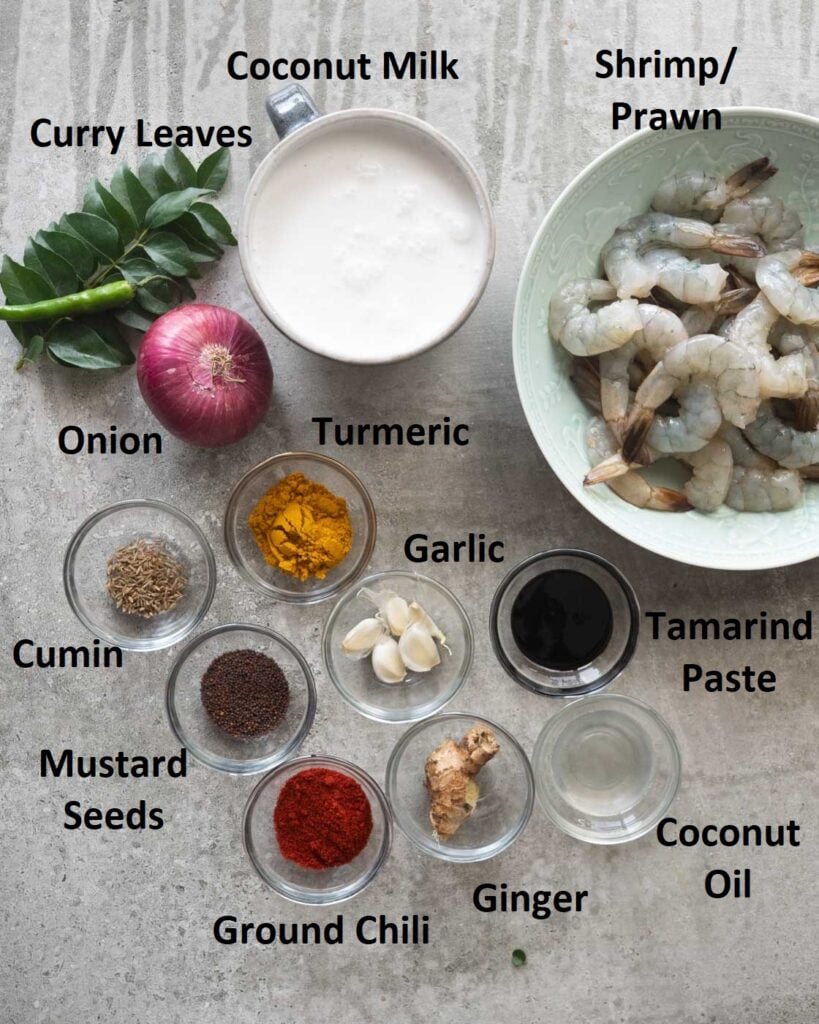
Prawn/ Shrimp
I like to use pre cleaned, deveined prawns or Shrimp. As explained below, depending on where you are, you will find either prawn or shrimp in your region.
For this recipe, you can use either prawn or shrimp. You can also use Scampi if you wish.
In the pictures, I have used tail on shrimp but you can use completely shelled, cleaned shrimp as well.
If using frozen shrimp, let it thaw in the refrigerator overnight or on the counter, till it's at room temperature.
You can also use any white fish to make a similar curry.
Tamarind or Kudampuli
This is the element gives the curry it's sour element.You can choose from
- Lemon Juice
- Tamarind Paste
- Kudampuli
- Tomato Paste
In Kerala, tamarind and Kudampuli is used interchangeably. Kudampuli is the local name of Garcia Cambojia.
Kudampuli is available in dry form and in a syrup form. Tamarind is also available in the dried fruit form and in pulp or paste form.
Though unlike tamarind, Kudampuli can get tangier the longer it stays in a curry. So I always remove it when my flavors are balanced.
You can also use Tomato Paste or lemon juice instead of tamarind or Kudampuli.
Curry Leaves
This herb is quintessential south indian herb. You can use fresh or dried with almost not a big change in flavor.
In a lot of dishes, the presence of curry leaves distinguishes the food from north and south india.
You get it easily in indian groceries. Keep it in an airy bag or a vegetable bag in the refrigerator. It dries up in the refrigerator very easily. You can keep it in that form for months.
You also get dried packaged form of curry leaves which have a long shelf life.
If you can't get it, you can easily omit it. It's more a cherry on the top than the main part of the dish.
Coconut Oil
We are already using coconut milk in this recipe. Adding coconut oil makes it richer and enhances the flavor.
Coconut Milk
In an ideal world, I would use freshly squeezed coconut milk. But that process is long and leads to a lot of soiled utensils.
So I prefer the coconut milk out of a can or a carton.
Onion
You can use regular red onions that you get in india.Outside india, use white or yellow onions.
To amp up the flavor, use sliced Shallots instead. They add a deep onion flavor that really goes with Kerala cuisine.
Kerala Shrimp Curry with Coconut Milk
Coconut milk is the defining ingredient here. The best option is to make coconut milk at home but that involves breaking open a coconut, scraping it, blending and straining it with water -which , to be frank is not only tedious but also needs a fair bit of muscle strength and some aggressive bashing.
Instead, find a brand of coconut milk that you love and use that. You will find brands labelled "coconut cream," which is usually higher in fat content and thicker. I prefer buying coconut cream and then thinning it as per my requirement instead of buying thin coconut milk, which is usually meant for adding to coffee.
Another great option is coconut milk powder- it's shelf-stable and you can adjust the consistency. When using coconut milk powder, make sure you whisk it well as it tends to form lumps.
Also, when using coconut milk(cream) in cooking curries like this one or a chicken curry with coconut milk, it should be the last ingredient you add. Coconut milk can split and thin when boiled aggressively.
How to make Kerala Shrimp Curry
Here is step by step instructions on how to make this Malabar seafood curry
Step 1: Prepare your Kudampuli or Tamarind
The easiest is to use tamarind paste or concentrate. Note concentrate will be more pungent than the paste. So bare that in mind while adding it to the curry. Add just 1 teaspoon to start with and adjust as you go.
If you are using tamarind or Kudampuli pulp, then you can just mix it with ½ cup of water.
If you are using dried Kudampuli or tamarind, you will need to boil it in 1 cup water and let it steep till you prepare the rest of the ingredients.
For Tamarind- Sieve it and use the pulp and water. Again, add half of it first and adjust as you go. Here are some alternatives to tamarind
For Kudampuli - Add just the water it was steeped in. If you feel that the curry could be tangier, add the Kudampuli pieces for 2-3 minutes while simmering.
Remember to remove the Kudampuli pieces because it keeps releasing it's pungency.
If you dont have tamarind or Kudampuli, use tomato paste or lemon juice instead.
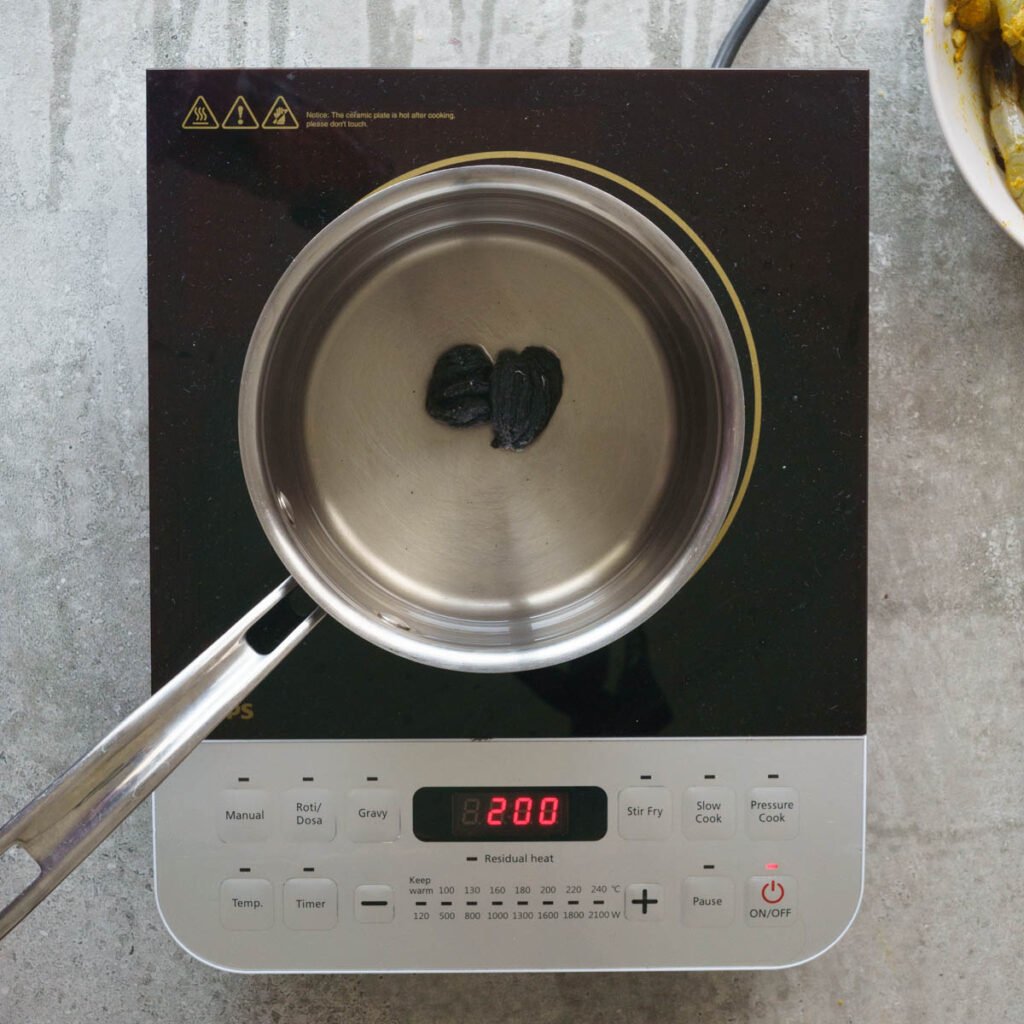
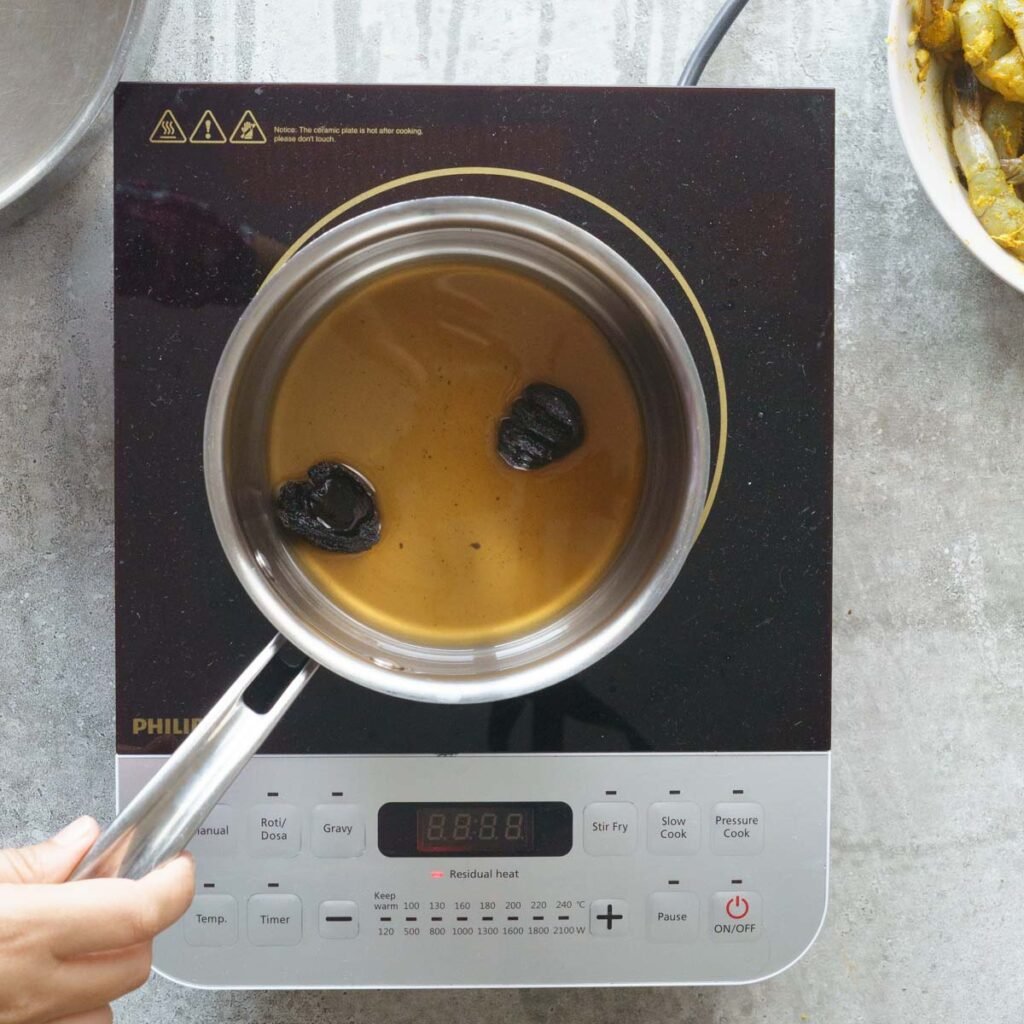
Step 2: Prepare Shrimp
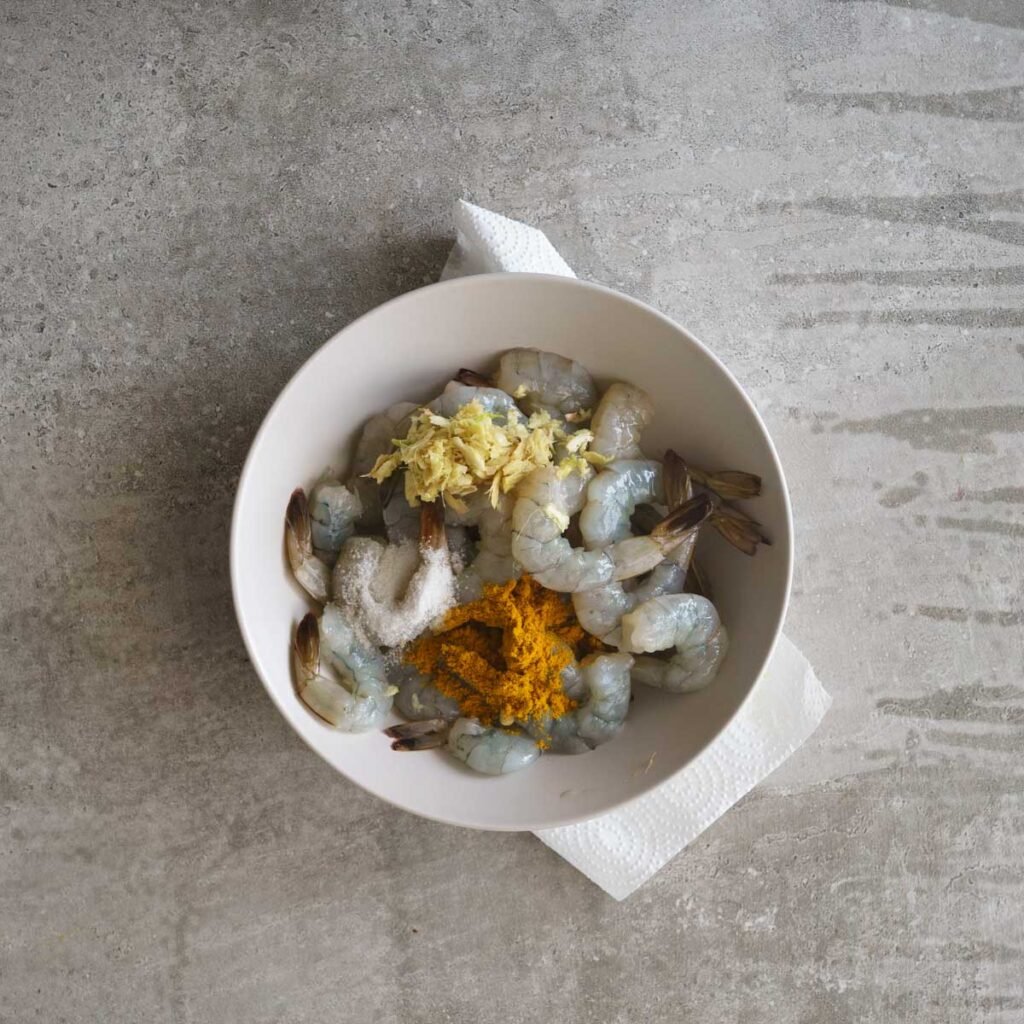
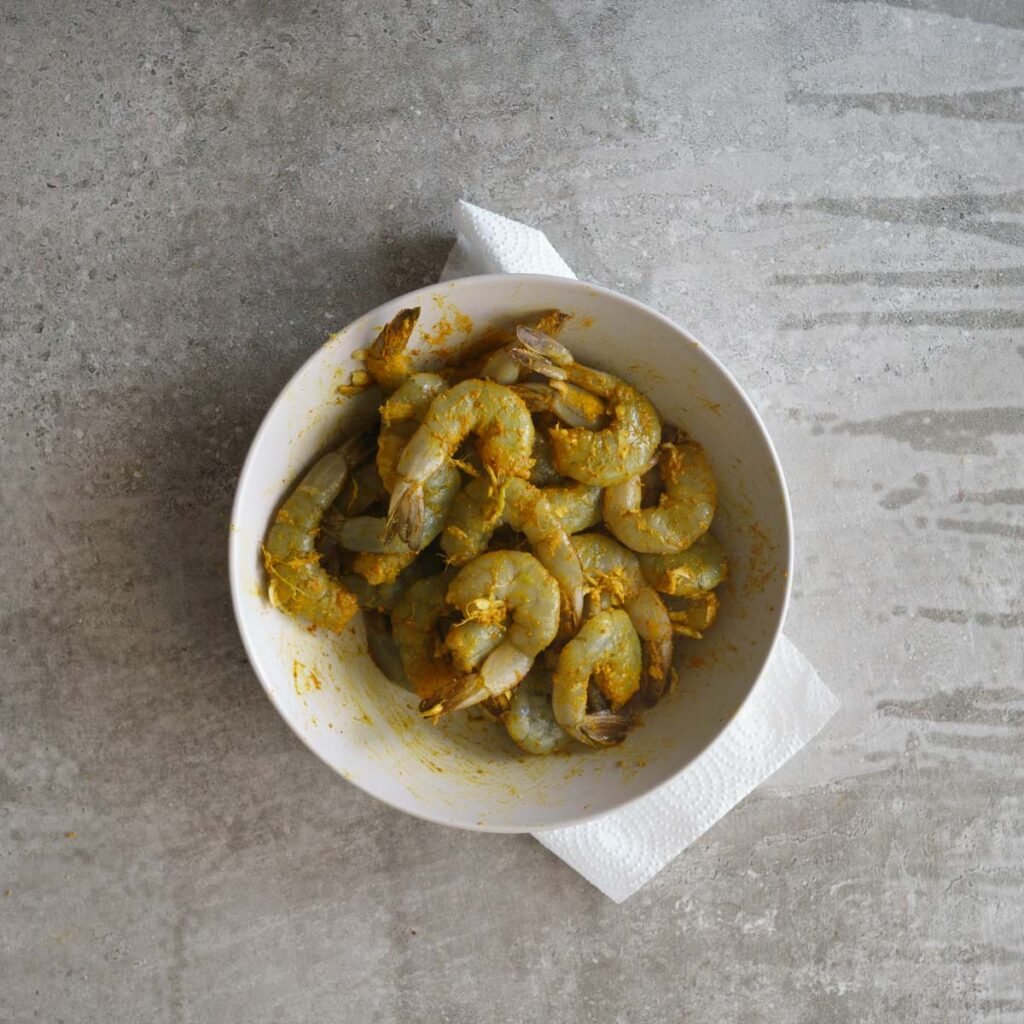
Add Salt, Turmeric, Ginger & Garlic to the shrimp and set aside.
This additional time will help the shrimp get seasoned from inside too.
Step 3: Sauté
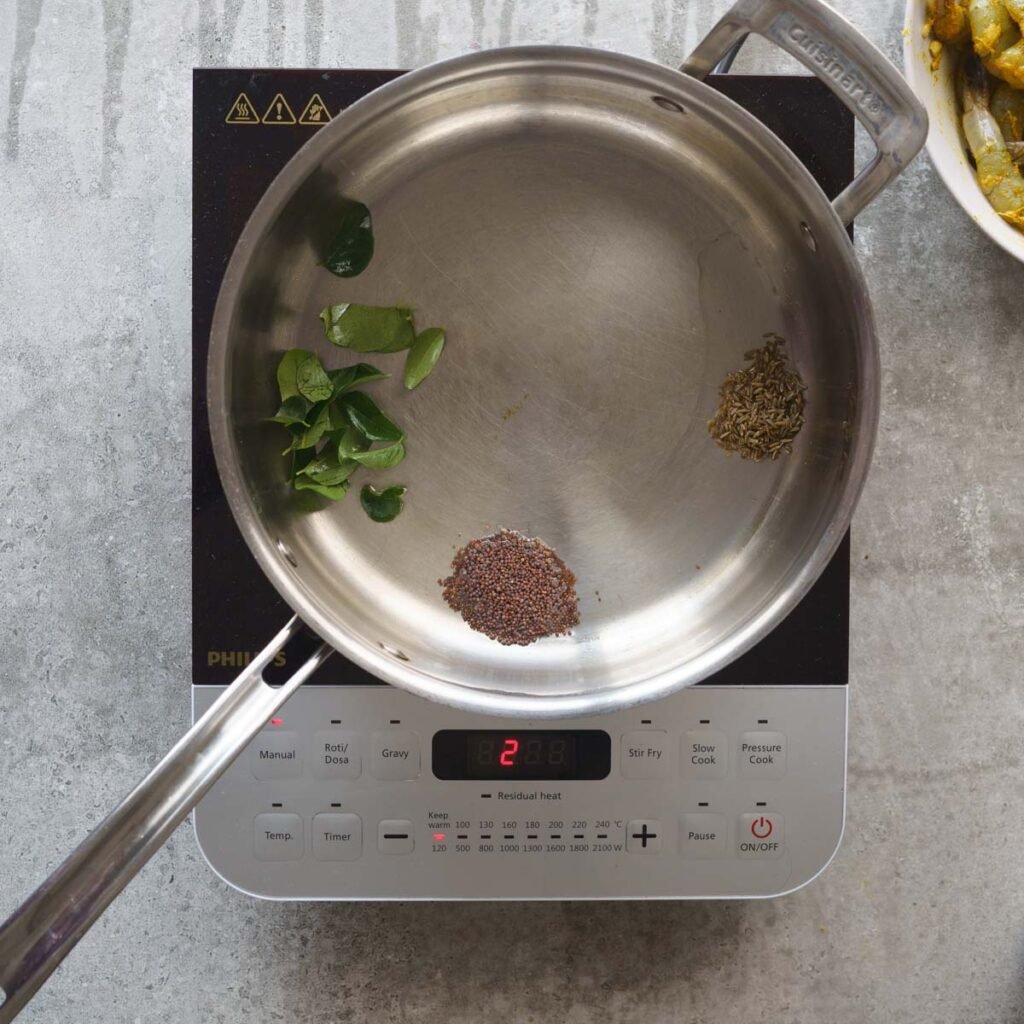
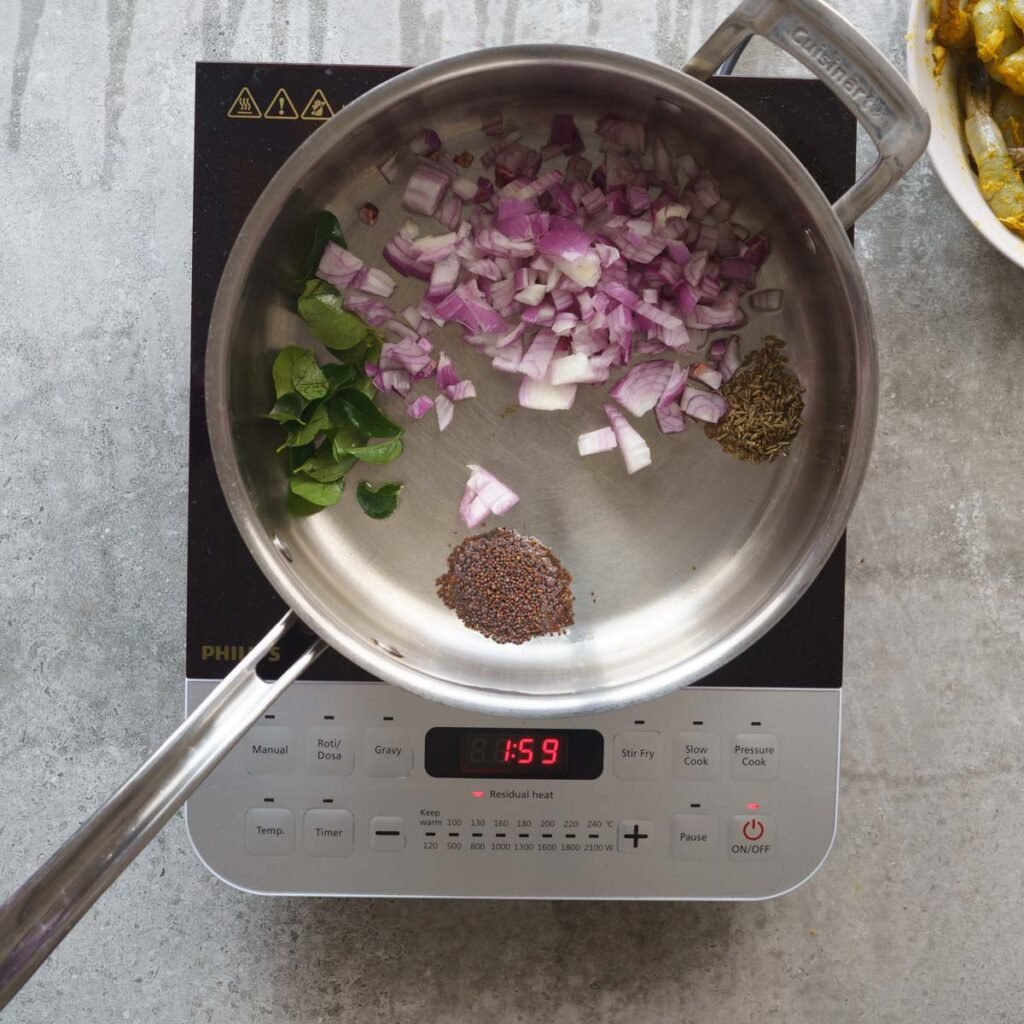
To a pot, add oil. Once it's hot, add the curry leaves, Green Chili, Mustard seeds & Cumin Seeds.
Once they splutter and spilt, add the onions. Let them cook till they turn translucent.
To this, add the Kashmiri chili powder and roast for about 30 seconds.
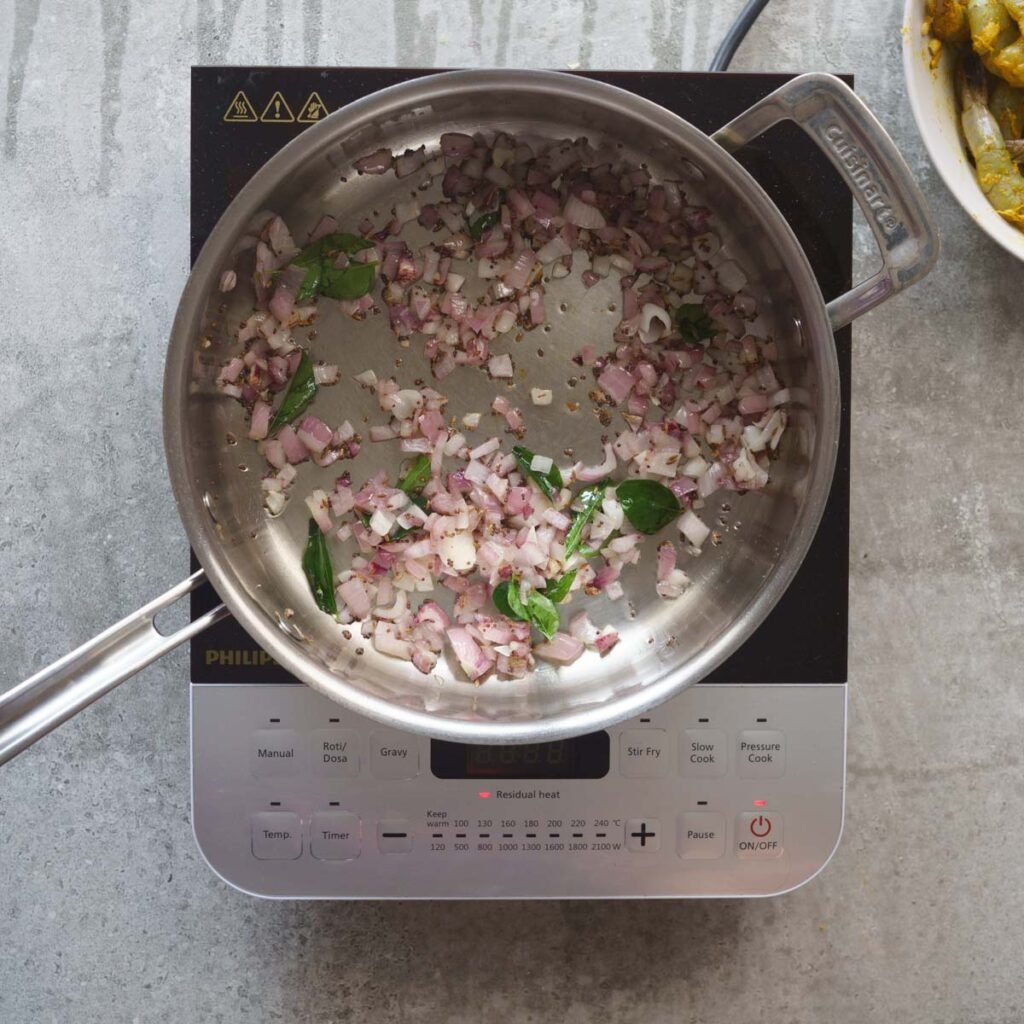

Step 4: Add Tamarind/Kudampuli & Shrimp
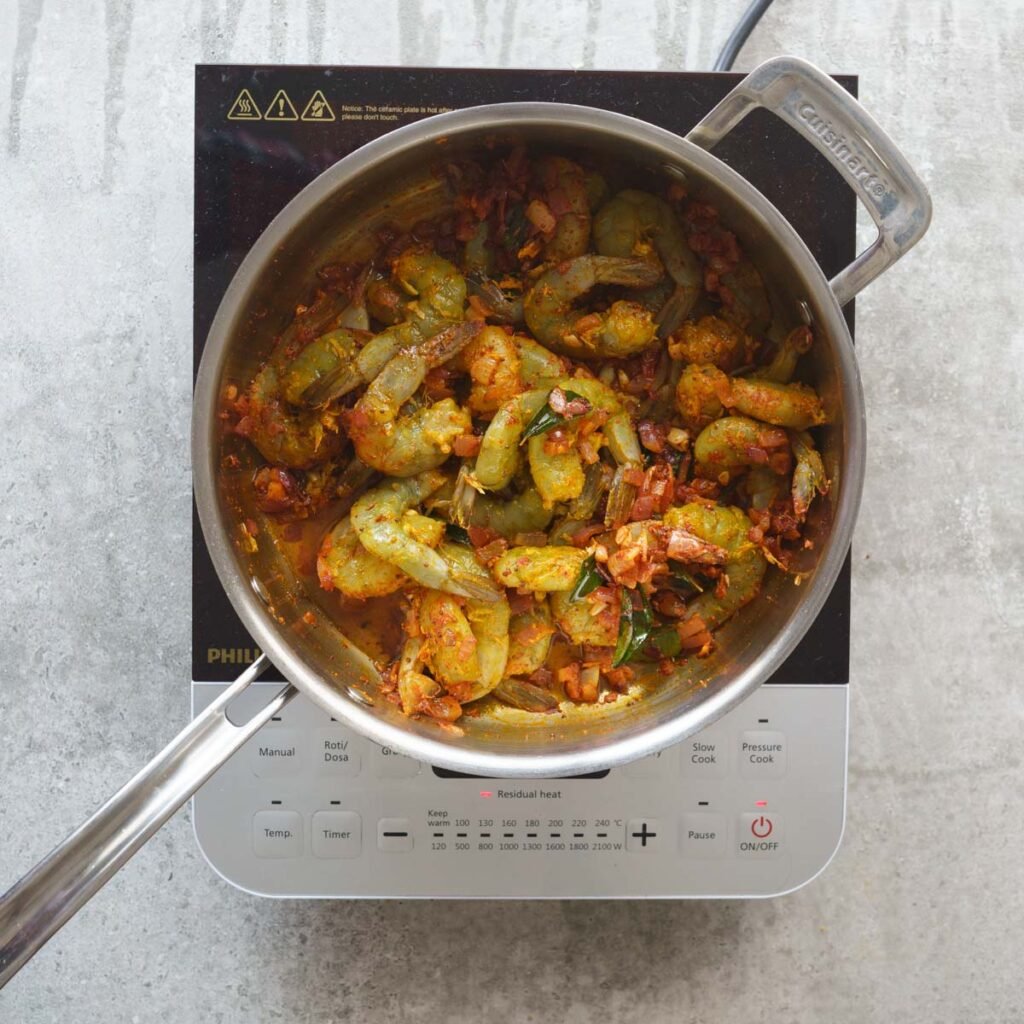
Now add your marinated shrimp and ¼ cup of Kudampuli water/ Tamarind water.
The prawns are cooked when they turn orange and curl into themselves.
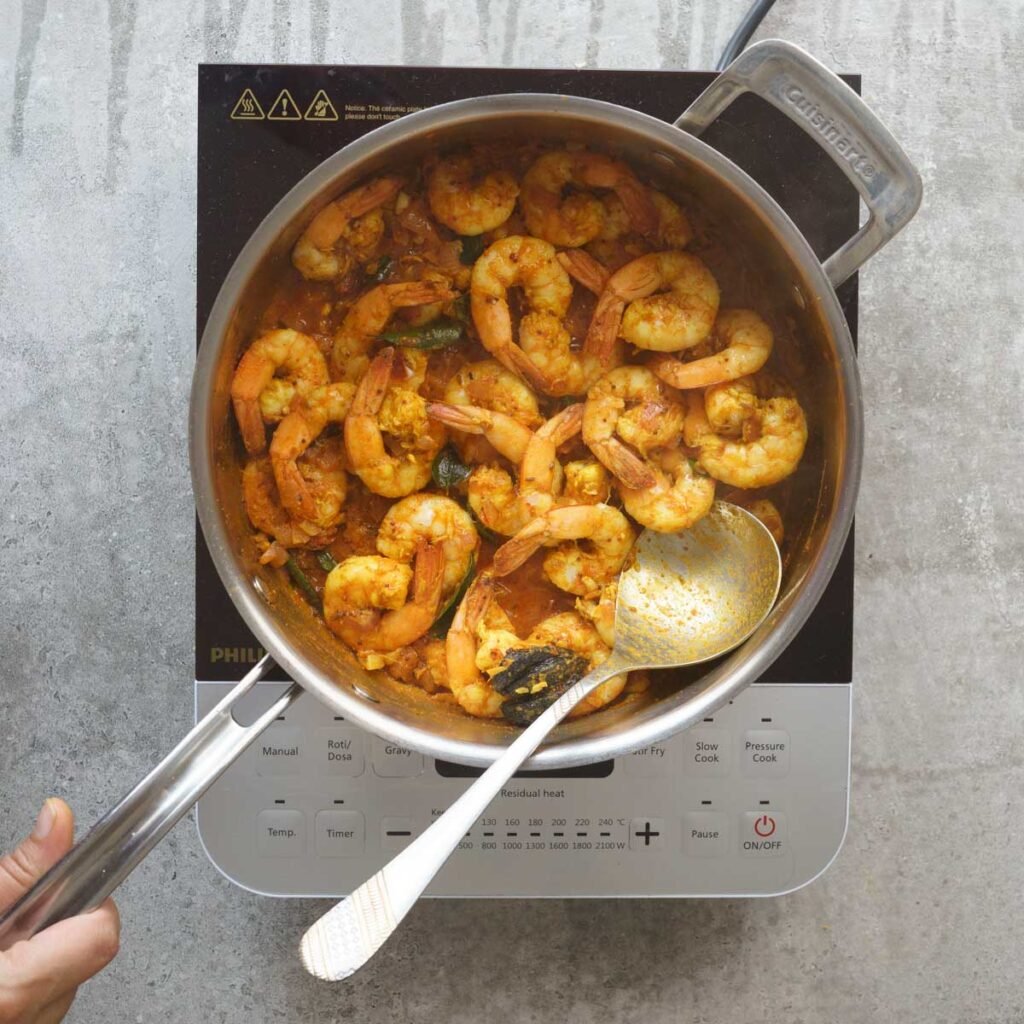
Step 5: Add the Coconut Milk
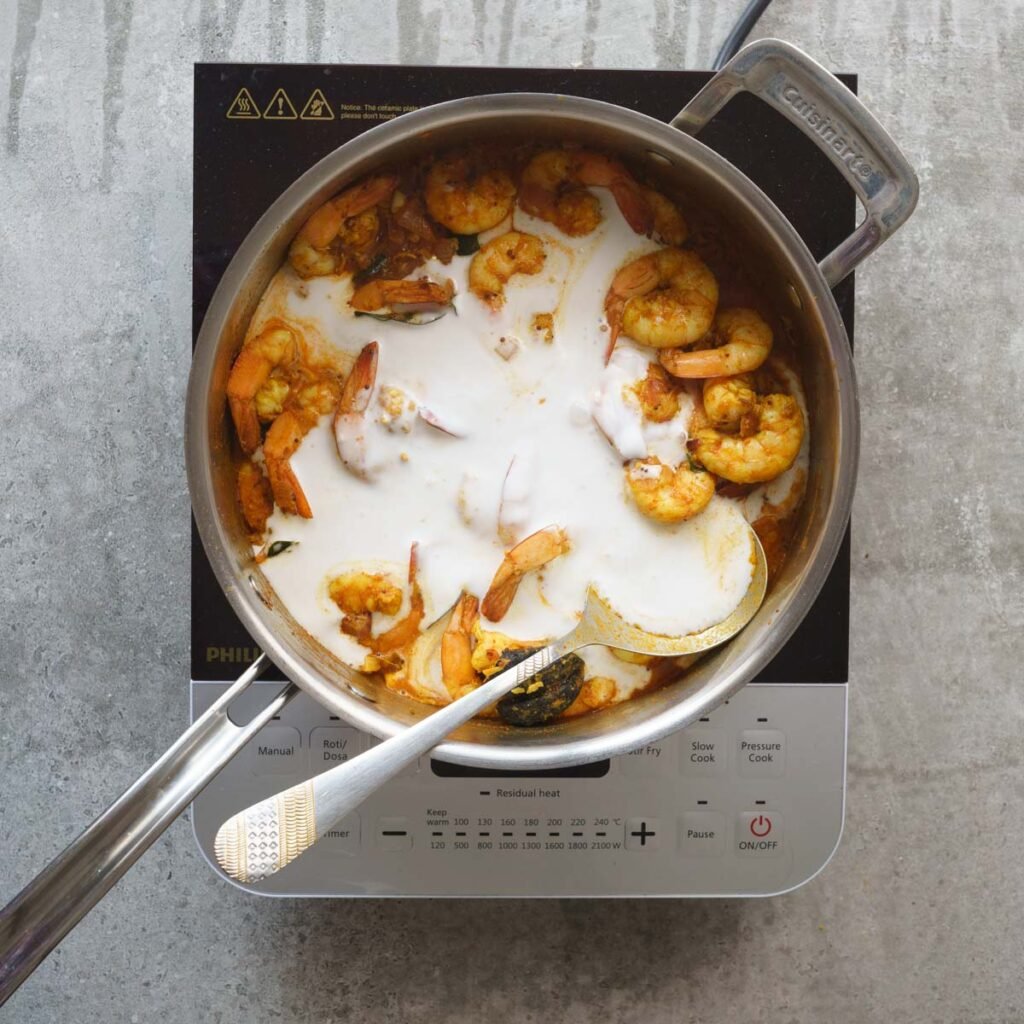
Once the prawns are cooked and the water has reduced to a few tablespoons, add the coconut milk.
Don't let it boil. This will ensure the curry is thick.
Taste and adjust salt and tamarind or Kudampuli accordingly.
TOP TIP - An easy way to balance the flavor in the curry is to play around with salty and sour notes. If the curry is too spicy and salty, add more sourness and vice versa.
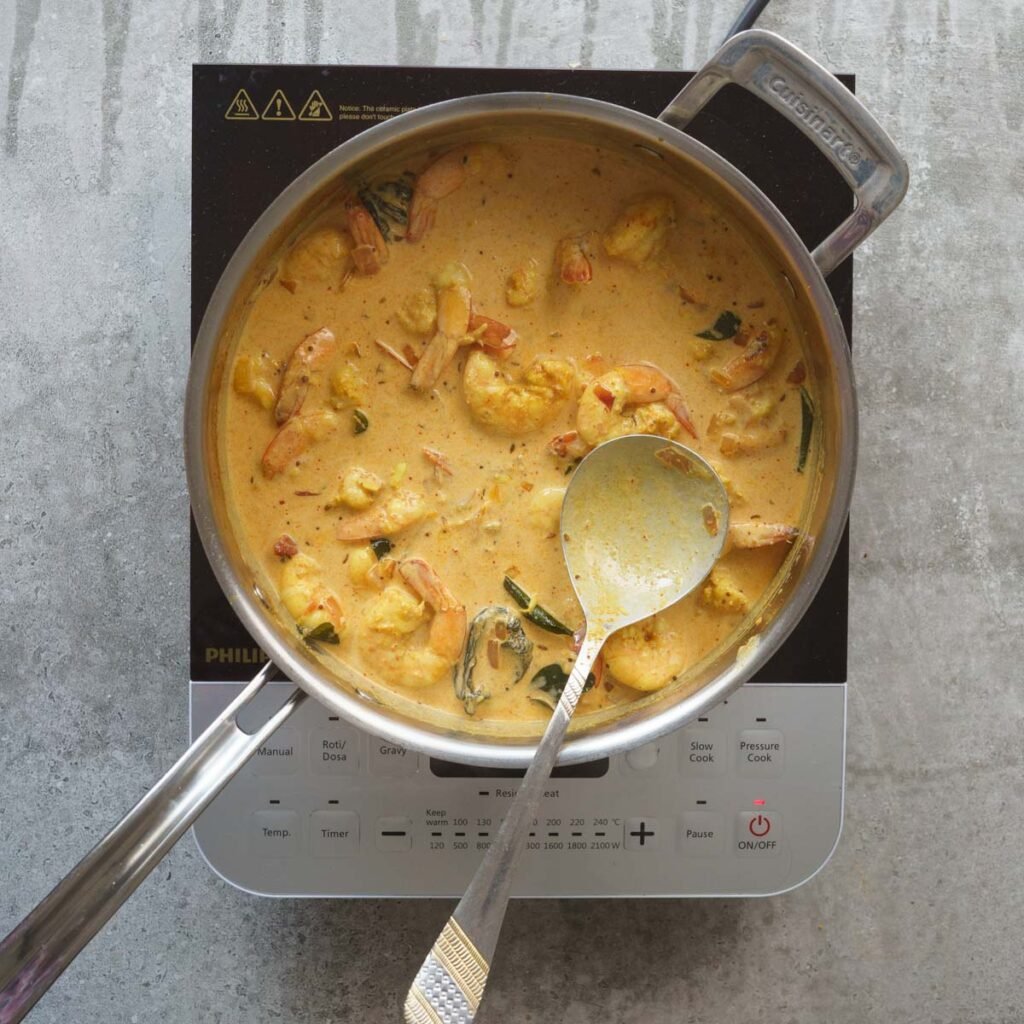
When is Shrimp/Prawn Cooked
Shrimp takes only about 3-5 minutes to cook, especially on direct heat.
Once the shrimp has curled, it's cooked. Any more cooking will lead to overcooking of the shrimp or prawn.
The other big clue is that shrimp turns from white to orange color. Almost coral salmon-ish hue.
Serving Shrimp Curry
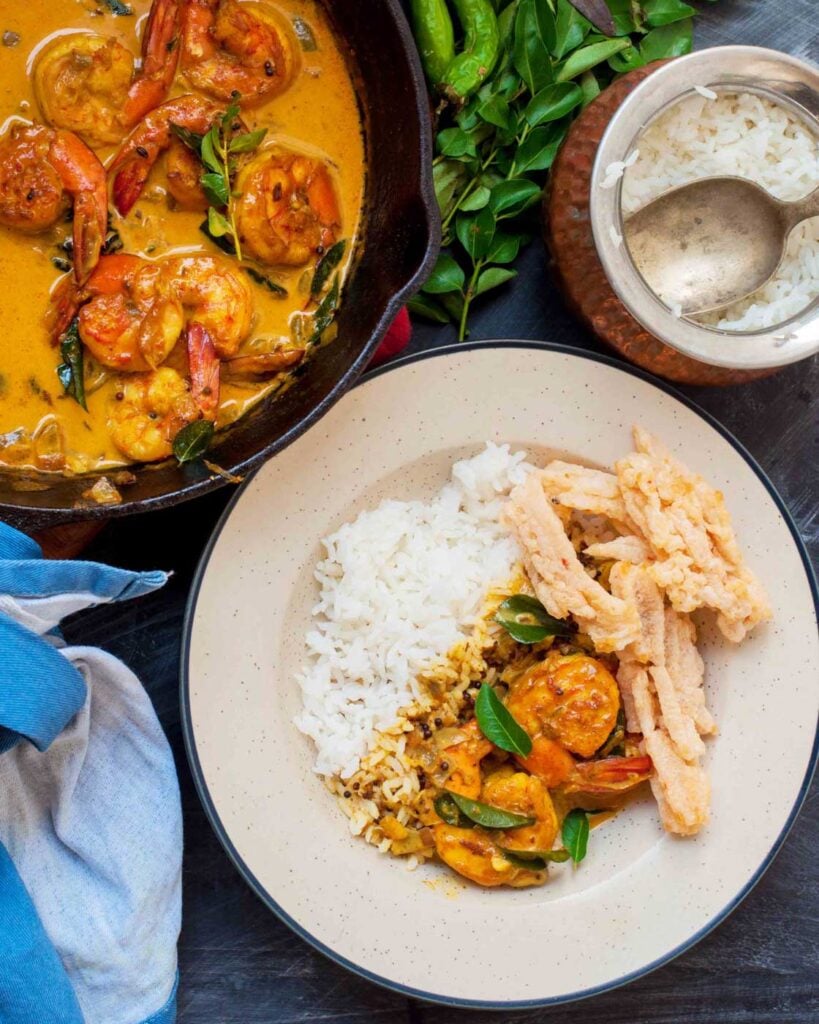
Typically shrimp curry is served over steaming hot soft rice along with pappadams or Vadams(as in the picture).
You can also serve this with Appams and Dosas.
If I was making a big feast from Kerala, I would make this shrimp curry or my Kerala Chicken Curry , a dry Chicken like Kerala Chicken Roast , a Veg Stew and Appams.
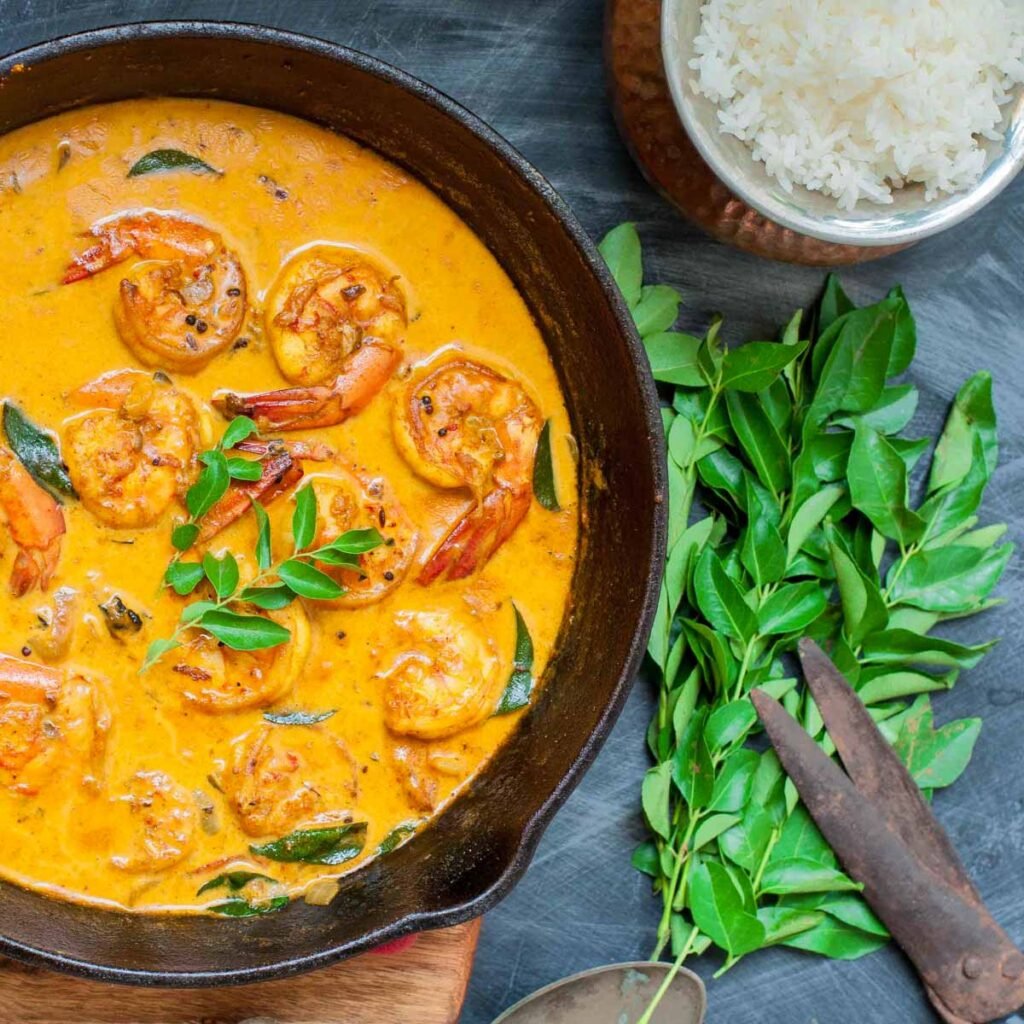
Storage and making ahead
This curry base tastes even better after a little rest, as the flavors get time to come together. The prawns, though, can turn rubbery with repeated reheating. If you’re making it ahead, prepare the gravy first and add the prawns when you’re ready to serve.
Store leftovers in an airtight container in the fridge and use within 2 days. Reheat gently over low heat, just until hot throughout, avoiding a hard boil.
I love freezing curries but in this case, I find it easier to make it fresh. That said, if you have leftovers and aren't eating it immediately, you can totally freeze the curry for 1-3 months, depending on your freezer.
More Indian Seafood Recipes
Prawn Curry with Raw Mango
Authentic Mangalorean Prawn Sukka
Authentic Mangalorean Prawn Curry-Yeti Gassi
Here are some recipes from Kerala that we cook in our house
Restaurant Style Ghee Rice Recipe
Kerala Vegetable Stew Recipe|for appam
Malabar Chicken Peralan | Kerala Chicken Roast
Nadan Kozhi Curry- Kerala Chicken Curry
Egg Roast Masala
If you make this delicious south indian shrimp curry, do leave me a comment and a rating.I would love to hear from you!
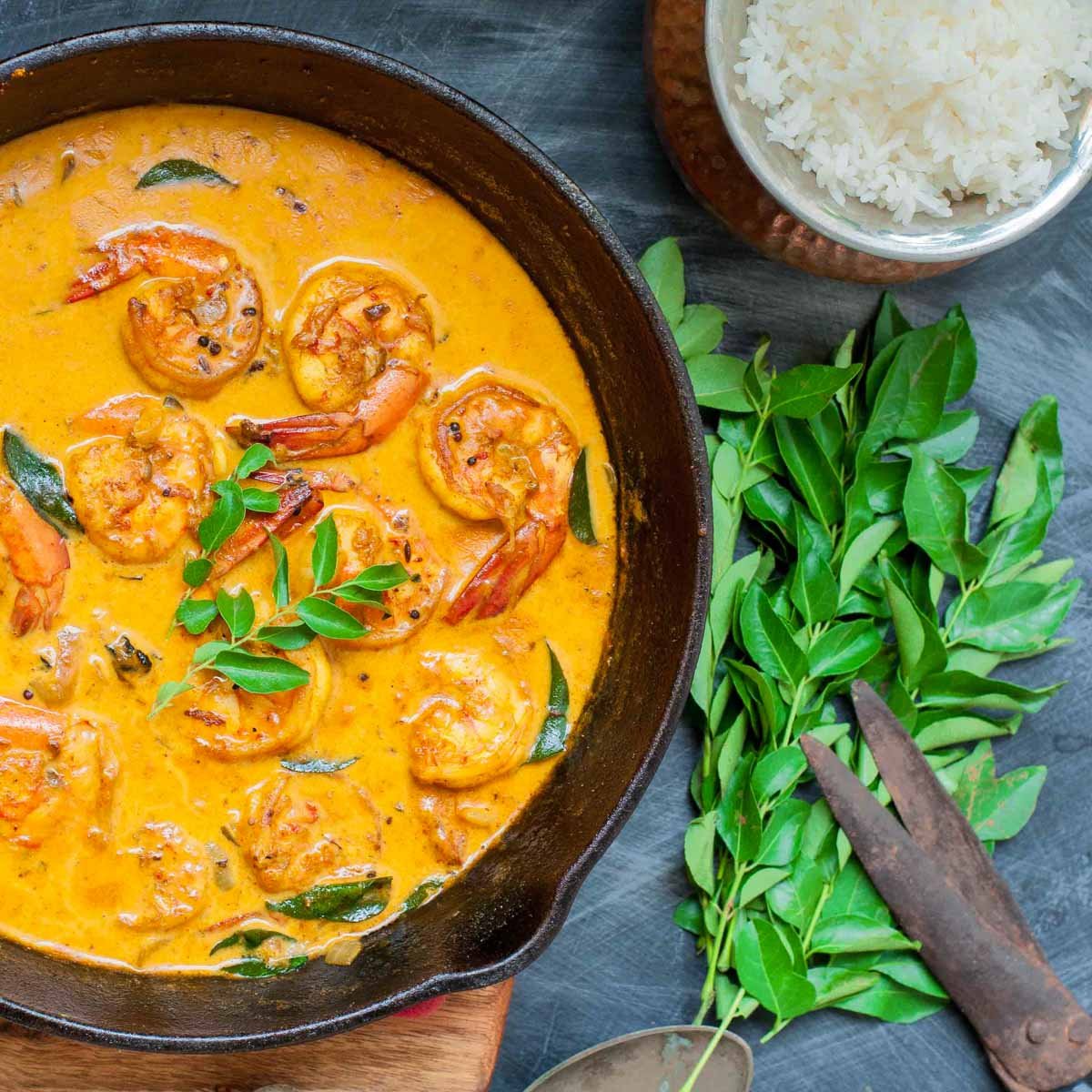
Kerala Prawn Curry with Coconut Milk
Ingredients
- 1 Pound Shrimp or Prawn ; 500gms; 2 Cups Cleaned & Deveined
- 1 teaspoon Garlic Grated, Pounded or Paste
- 2 teaspoon Ginger Grated, Pounded or Paste
- 2 teaspoon Turmeric
- 2 tablespoon Coconut Oil
- 10-15 Curry leaves
- 1 teaspoon Mustard seeds
- 1 teaspoon Cumin seeds
- 1 Green Chili Chopped; Optional
- 1 Onion About 1 Cup -chopped
- 2-3 Shallots Optional-Sliced
- 2 teaspoon Kashmiri Chili Powder Or Paprika
- 300 ml Coconut milk
- 1 tablespoon Tamarind Paste or 2 pieces of Kudampuli
- Salt to taste
Instructions
- Boil 1 Cup of water. Add the dried tamarind or Kudampuli. Let it steep for 10-15 minutes till you do rest of the prep. If using tamarind paste, mix it in ½ cup of water.
- Add 1 teaspoon salt, turmeric, ginger, and garlic to the shrimp. Mix and set aside.

- Heat a pot on medium flame. Once hot, add the oil. Heat for 10-15 seconds.
- Add the mustard seeds and cumin. When they start to splutter add the curry leaves and chili .Sauté for 10-15 seconds.
- To this, add the chopped onion or shallots. Sauté till they are translucent. This should take 1-2 minutes.
- Add the Kashmiri Chili powder and roast for 10-30 seconds.
- Add the cleaned shrimp, Kudampuli or tamarind water. Bring to boil.

- The shrimp is cooked when it has turned orange and curled up.
- Add the coconut milk. Let it heat through but don't bring it to boil
- Check the salt and sourness. Add more of salt and tamarind/ Kudampuli water if needed to balance the curry.
- Garnish with Coriander or curry leaves. Serve hot.
Notes
Ground Chili
Use Kashmiri Chili or Paprika for color. 1 tsp- Mild Curry2 tsp- Average Spice
3 teaspoon - Spicy Curry To make it spicier, use 1-2 slit green chili while sauteing the onions.
Coconut Milk
A quick note on coconut milk: In the US, look for unsweetened canned coconut milk or coconut cream, usually found in the Asian or international food aisle. Coconut cream is thicker and richer—you can thin it with a little water for this curry. Light coconut milk works too, but gives you a thinner, less rich gravy. Coconut milk beverages, sometimes labelled coconut drink or barista coconut milk, are usually diluted and meant for drinking or adding to coffee. These aren’t the best choice here. Coconut milk powder is another option—mix it with water according to the packet instructions, whisking well to avoid lumps. Watch out for cream of coconut: despite the similar name, it’s usually sweetened and meant for cocktails or desserts. Creamed coconut is different again—it’s a concentrated coconut paste, often sold in a solid block, that needs dissolving in warm water.Tamarind/Kudampuli
The easiest is to use tamarind paste or concentrate. Note concentrate will be more pungent than the paste. So bare that in mind while adding it to the curry. Add just 1 teaspoon to start with and adjust as you go. To use dried Kudampuli or Tamarind, Boil it in water, and let it steep. For Tamarind- Sieve it and use the pulp and water. Again, add half of it first and adjust as you go. For Kudampuli - Add just the water it was steeped in. If you feel that the curry could be tangier, add the Kudampuli pieces for 2-3 minutes while simmering. Remember to remove the Kudampuli pieces because it keeps releasing its pungency.Nutrition
Yes! Thaw them in the fridge, drain and pat dry before using. Choose raw frozen shrimp—already-cooked shrimp can become tough when cooked again in the curry.
Absolutely. Both work well in this Kerala curry. Cooking time depends on their size, so cook just until they turn opaque and curl into a loose C shape.
Tamarind works well, though it has a different flavor. Add a little at a time and taste the gravy before adding more, as the strength of tamarind paste varies between brands.
Yes, I often do! Use unsweetened coconut cream and thin it with a little water to get the consistency you like. Add it towards the end and keep the heat gentle.
Steamed rice is my favourite—you want something to soak up all that gravy. Appam, idiyappam or a plain dosa or appam are lovely with it too.


Girisha Lakhiani says
Hi , the recipe was very easy to prepare and had good flavours. 4 stars
Dia says
First time making this type of curry and it brought nostalgia when I tasted. Really good recipe!! My mom would be proud of what I made today.
chhavi says
thankyou for coming back and writing this comment..am glad you liked it.
Archana says
Chhavi ,
The prawn curry recipe was awesome. We licked the pan and the spoon till the end. Lip-smackingly delicious. However, I just did a small alteration to the recipe...added lime juice to the prawn marinade. My god, the curry tasted heavenly!!!❤️
Leena says
Delicious and easy to make
Aarti says
This recipe looks really delicious. Can you suggest any dishes to serve with this shrimp. Looking for something in addition to plain rice for guests. Anything green would be a plus!
Michelle says
I have made this a couple of times and it is so full of flavour. However I am confused about your note in the recipe. You said that the curry tastes better once cooked for a few hours and made the day before, yet in the recipe instructions, you say that the prawns only require a few minutes to cook and to not over cook them! I am keen to let flavours develop but don't want to spoil the prawns! Can you clarify?
chhavi says
So the cooking time of prawn is very short but they do benefit from sitting in the curry for a bit.That way the spices and the flavors get into the prawn and season it from inside.
Cass says
The prawn is good with it but could I make this with chicken instead?
chhavi says
Yes definately but you will have to cook the chicken completely before you can add coconut milk to it.