

Kesar Phirni is a creamy, fragrant Indian rice pudding made with coarsely ground basmati rice, whole milk, saffron and cardamom.
And despite how festive and fancy it looks, it is insanely easy to make.
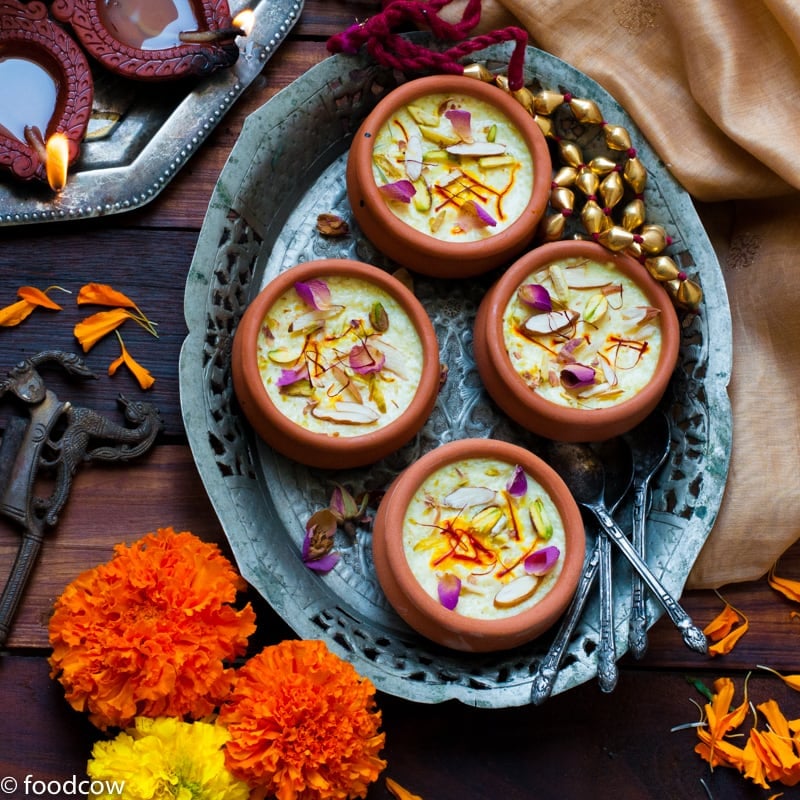
The first time I made phirni, I was actually surprised by how easily it came together. There are no complicated techniques or long ingredient lists—you basically need rice, milk, sugar and a few good flavorings.
The only real requirement is a little patience while the milk reduces.
The end result is thick, creamy and lightly scented with saffron and cardamom. Pour it into small earthen pots, chill it properly and it turns into one of my favorite Indian desserts for Diwali, dinner parties and special occasions.
If you love creamy Indian puddings, you should also try my Instant Pot Rice Kheer or the much more hands-off Instant Pot Vermicelli Kheer.
What Is Phirni?
Phirni is a traditional chilled Indian rice pudding made by cooking coarsely ground rice in milk and sugar until thick and creamy.
It is often flavored with cardamom, saffron, rose water or nuts and traditionally served chilled in small earthen pots.
The important thing here is coarsely ground rice.
Unlike rice kheer, where you can actually see the grains of rice, the rice in phirni is soaked and ground before it is cooked.
That's what gives phirni its completely different texture—somewhere between a creamy rice pudding and a set custard.
It is traditionally garnished with slivered almonds and pistachios, and for festivals you sometimes see it decorated with edible silver leaf or varak.
What Is Kesar Phirni?
Kesar simply means saffron.
So Kesar Phirni is phirni flavored generously with saffron along with cardamom.
The saffron gives the pudding a beautiful pale-golden color and that unmistakable floral aroma.
If you love saffron desserts, my Saffron Cardamom Milk Cake uses the same very Indian combination of saffron, cardamom and nuts in a completely different way.
Ingredients for Kesar Phirni
You only need a handful of ingredients.
Basmati Rice
I use basmati rice because I love its fragrance.
The rice needs to be soaked first and then ground coarsely.
And when I say coarsely, I mean it.
DO NOT MAKE A SMOOTH PASTE!
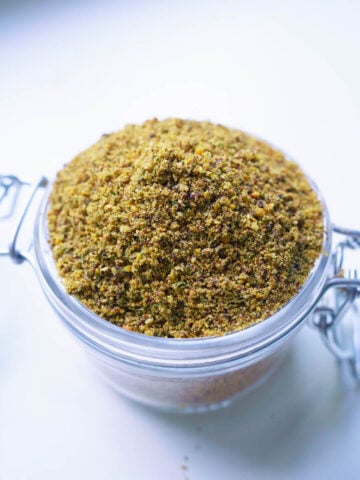
You want the ground rice to look slightly gritty—somewhere around coarse semolina.
If you grind it into rice flour, you lose that lovely phirni texture.
Whole Milk
Whole milk gives you the creamiest phirni.
One important part of my recipe is reducing the milk before adding the ground rice.
This removes some of the water and makes the finished pudding much richer and creamier without needing condensed milk or cream.
Sugar
I usually add about ¼ cup because I don't like my desserts extremely sweet.
You can increase it up to ½ cup depending on your taste.
Saffron
Because this is Kesar Phirni, good saffron actually matters here.
You don't need a huge amount—a couple of generous pinches are enough.
Cardamom
Cardamom and saffron are basically made for each other.
I use whole green cardamom pods while reducing the milk and remove them before adding the rice.
How to Use Saffron in Phirni
Instead of throwing dry saffron directly into the milk, soak it first.
Take a pinch of saffron and add it to about 2 tablespoons of warm milk.
Let it sit while the rest of the milk reduces.
You can gently crush the saffron between your fingers before soaking it. This helps it release more of its color and aroma.
You aren't trying to turn the phirni bright yellow.
A good Kesar Phirni should have a beautiful soft golden color and smell of saffron—not food coloring.
How to Make Kesar Phirni
Step 1 – Soak the Rice
Wash and soak the basmati rice in water for about 2–4 hours.
Soaking softens the rice and makes it easier to grind.
Step 2 – Infuse the Saffron
Soak a generous pinch of saffron in about 2 tablespoons of warm milk.
Keep this aside.
Step 3 – Reduce the Milk
Add the whole milk to a heavy-bottomed kadai or saucepan.
Add lightly crushed cardamom pods.
Bring the milk to a boil and then reduce the heat.
Let it simmer for about 15–20 minutes, stirring every few minutes so the milk doesn't catch at the bottom.
I reduce the milk considerably—roughly to about half its starting volume.
This is what makes the phirni extra creamy.
Remove the cardamom pods.
Step 4 – Grind the Rice
Drain the soaked rice.
Pulse it in a blender until coarsely ground.
Again: you do not want rice paste.
When you rub a little between your fingers, you should still be able to feel the tiny grains.
Step 5 – Cook the Phirni
Add the coarsely ground rice, sugar and saffron milk to the reduced milk.
Stir well.
Cook over low heat for about 10 minutes, stirring regularly.
Check that the rice is cooked.
Continue cooking uncovered until the phirni has thickened.
How Thick Should Phirni Be?
Don't wait until it looks completely set in the pan.
Hot phirni should be thick but still pourable.
Run a spoon through it—it should coat the back of the spoon, but still fall slowly when poured.
Remember that phirni becomes much thicker once chilled.
If you cook it until it is extremely thick on the stove, you'll probably end up with something closer to rice cement once it has spent a few hours in the fridge!
If the phirni is too thin
Continue cooking it uncovered over low heat, stirring frequently.
If the phirni is too thick
Stir in a little warm milk until it loosens.
Difference Between Kheer and Phirni
Kheer and phirni use many of the same ingredients—rice, milk, sugar and cardamom—but the final desserts are quite different.
The biggest difference is the rice.
In Rice Kheer, the rice grains are cooked whole in the milk.
In phirni, the rice is soaked and coarsely ground before cooking.
Because of this, phirni is much thicker and smoother.
Kheer can be served warm or cold. Phirni, for me, is definitely a chilled dessert.
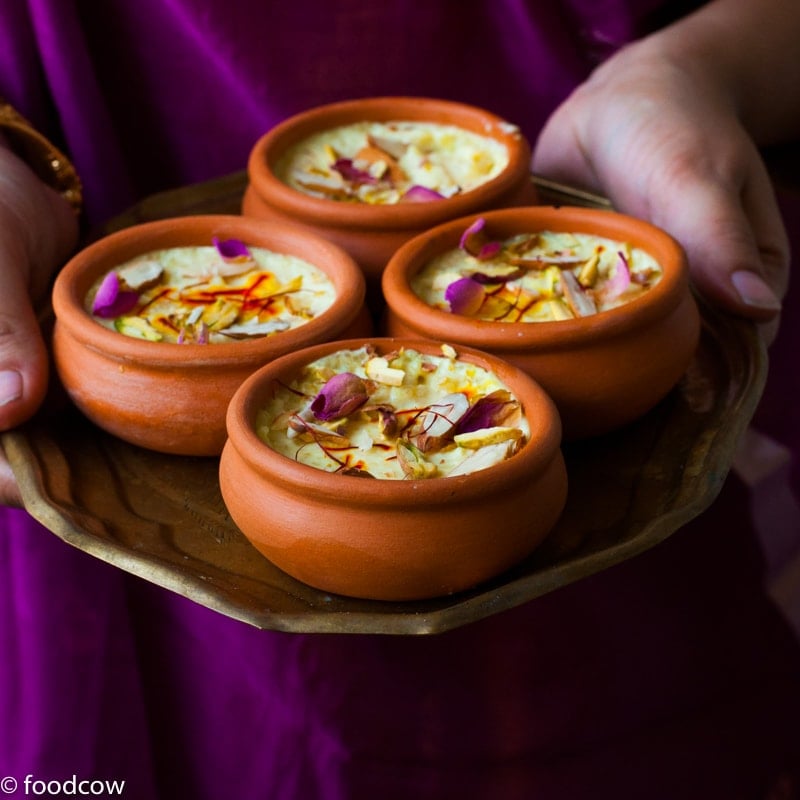
And traditionally it is poured into little earthen pots and left to set.
There are so many different types of kheer in India too—rice, sabudana, makhana, sooji and Vermicelli Kheer / Semiya Payasam to name just a few.
Serving Kesar Phirni in Earthen Pots
Chilling phirni in earthen pots makes it even more delicious, if that was even possible.
Once the pudding is cooked, pour it into small clay pots while it is still slightly warm.
Let it cool, cover and refrigerate.
I prefer chilling mine overnight.
The earthen pot absorbs a little of the moisture from the phirni, making the pudding thicker while also giving it that characteristic earthy aroma.
It also just looks beautiful.
Do I Have to Use Earthen Pots?
No.
If you don't have clay pots, use ramekins, dessert bowls or glasses.
The phirni will still taste delicious.
Just remember that a regular bowl won't absorb any moisture, so your pudding may remain slightly softer than phirni chilled in earthenware.
Different Kinds of Phirni
Once you've made the basic version, you can play around with the flavors.
Rose Phirni
Skip the saffron or use less of it and add a little rose water once the phirni has finished cooking.
I prefer adding rose water at the end so the fragrance stays fresh.
Mango Phirni
Make the basic phirni and let it cool.
Stir in mango puree once it is no longer hot, then chill.
Do not cook the mango with the milk.
Pista Phirni
Add finely ground or chopped pistachios while the phirni is cooking and garnish with plenty more pistachios before serving.
Jaggery Phirni
If you're using jaggery instead of white sugar, cook the rice and milk first.
Let it cool slightly before adding jaggery syrup.
I wouldn't boil jaggery aggressively with the milk because it can sometimes cause the dairy to split.
Dairy-Free Phirni
You can make phirni with almond or cashew milk.
Nut milk doesn't need nearly as much reducing as dairy milk, so keep a closer eye on the consistency.
Tips for the Best Phirni
Use a heavy-bottomed pan.
Milk catches surprisingly quickly once it starts reducing.
Don't grind the rice too finely.
This is probably the most important tip in the entire recipe.
Stir frequently once the rice goes in.
Ground rice settles at the bottom much more easily than whole rice.
Don't overcook it.
The phirni will thicken substantially once chilled.
Give it enough chilling time.
Four hours is good. Overnight is even better.
Use good saffron.
When your ingredient list is this short, the quality of the saffron and cardamom really comes through.
How to Serve Kesar Phirni
Phirni should be served properly chilled.
Before serving, top each pot with slivered pistachios and almonds, a couple of saffron strands and—if you are feeling particularly festive—a tiny piece of edible silver leaf.
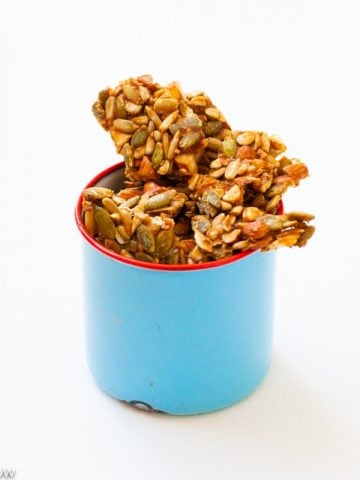
For Diwali, I like the idea of serving one creamy dessert like phirni with something completely different in texture, like Ragi Ladoo or crunchy Seeds and Nuts Chikki.
And because phirni is made ahead and chilled, it is actually a fantastic dinner-party dessert.
One less thing to do when people arrive!
Storage
Keep the phirni covered in the refrigerator.
It is best eaten within 2–3 days.
The pudding will continue to thicken as it sits, especially if it is stored in earthen pots.
If it becomes too thick, you can stir a small amount of cold milk into it, although once I have set individual clay pots I usually just leave them alone.
FAQs
What is phirni made of?
Traditional phirni is made with coarsely ground rice, milk and sugar and flavored with ingredients such as cardamom, saffron, rose or nuts.
Is phirni the same as rice kheer?
No. They use similar ingredients, but kheer is usually made with whole rice while phirni uses soaked, coarsely ground rice. Phirni is also generally much thicker and served chilled.
How coarse should rice be for phirni?
Grind the soaked rice until it resembles coarse semolina. It should feel slightly gritty between your fingers. Do not grind it into a completely smooth paste.
Why is my phirni not thickening?
It may need a little more time on the stove. Cook it uncovered over low heat and stir frequently.
Also remember that phirni thickens considerably as it cools.
Can I make phirni without saffron?
Absolutely.
Saffron turns this into Kesar Phirni, but you can make plain cardamom phirni or flavor it with rose, mango or pistachios instead.
Can I make phirni ahead of time?
Yes—and I actually prefer it that way.
Make it the day before, pour it into individual bowls or clay pots and refrigerate overnight.
Can I use rice flour to make phirni?
You technically can, but I prefer soaked and coarsely ground basmati rice because it gives the pudding its characteristic slightly grainy texture.
If you make this Kesar Phirni, do drop me a note. I would love to hear from you!
Kesar Phirni – Saffron Rice Pudding
Ingredients
- 1 litre Whole Milk
- 4 tablespoons Basmati Rice
- ½ Cup Granulated White Sugar I usually add only ¼ cup
- 4 Green Cardamom pods
- 2 Pinch Saffron
Optional Garnish
- 1 tablespoons almonds Slivered
- 1 tablespoons Pistachio Slivered
Instructions
- Wash the basmati rice and soak it in water for 2–4 hours.
- Add one generous pinch of saffron to 2 tablespoons warm milk. Set aside to infuse.
- Add the remaining milk to a heavy-bottomed saucepan or kadai. Lightly crush the cardamom pods and add them to the milk.
- Bring the milk to a boil, then reduce the heat and simmer for 15–20 minutes, stirring occasionally so it doesn't catch at the bottom.
- Continue reducing until the milk is roughly half its original volume. Remove the cardamom pods.
- Drain the soaked rice and pulse it in a blender until coarsely ground. It should resemble coarse semolina. Do not grind it into a smooth paste.
- Add the ground rice, sugar and saffron-infused milk to the reduced milk.
- Cook over low heat for about 10 minutes, stirring regularly so the rice doesn't settle at the bottom.
- Check that the rice is cooked. Continue cooking uncovered until the phirni is thick but still pourable.
- Remove from the heat and let it cool slightly.
- Pour into individual earthen pots, ramekins or dessert bowls.
- Cover and refrigerate for at least 4 hours, preferably overnight.
- Garnish with the remaining saffron, slivered almonds and pistachios before serving chilled.
Notes
The rice should be coarsely ground—not powdered and not blended into a smooth paste. This slightly gritty rice is what gives phirni its characteristic texture. Consistency
The phirni should still be pourable when you take it off the heat. It will thicken considerably once chilled. Too thick?
Stir in a little warm milk. Too thin?
Cook uncovered for a few more minutes over low heat. Sugar
I generally use about ¼ cup because I prefer a less-sweet phirni. Increase to ½ cup if you like your Indian desserts sweeter. Saffron
Soaking saffron in warm milk before adding it helps release its color and fragrance. Clay pots
Earthen pots aren't essential, but they absorb some moisture from the pudding and help create a thicker set texture. Make ahead
Phirni is an excellent make-ahead dessert. I prefer making it the night before and chilling it overnight. Storage
Keep covered in the refrigerator and eat within 2–3 days.

Leave a Reply